
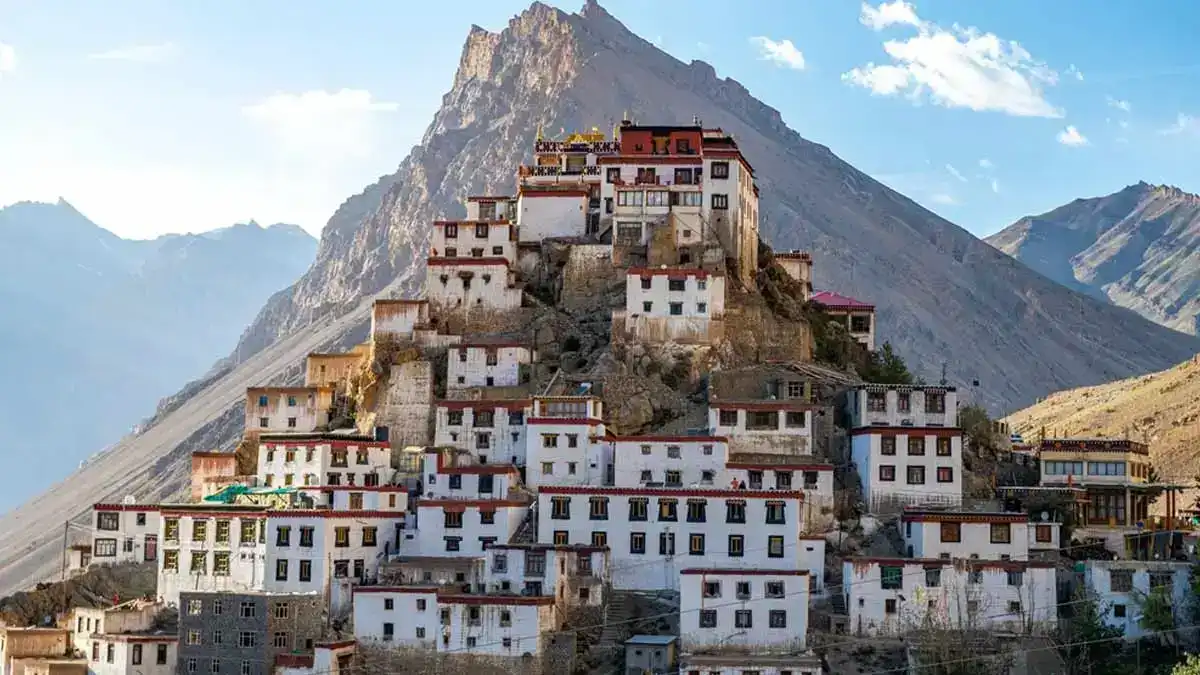
Spiti Valley is one of the last truly untouched corners of the Himalayas — a cold desert of bare mountains, whitewashed monasteries, and villages that feel a thousand years removed from anywhere else in India. If you're planning your first trip here, this guide covers everything: when to go, how to get there, what permits you need, and a realistic day-by-day plan.
Where Is Spiti Valley?
Spiti sits in the northeastern corner of Himachal Pradesh, bordering Tibet. The name itself means "the middle land" — a reference to its position between India and Tibet. At altitudes ranging from 3,000 to over 4,500 meters, it's one of the country's highest inhabited regions, and the landscape reflects it: stark brown mountains, glacial rivers, and villages that seem to grow directly out of the rock.
Most travelers reach Spiti as an extension of a broader Himachal trip, often starting from Shimla or Manali.
Best Time to Visit Spiti Valley
Summer (June to September) is when Spiti is most accessible and most visited. Roads are open, the weather is mild during the day (10–20°C), and all the major passes connecting Spiti to Manali and Shimla are clear. July and August also bring the best chance of clear mountain views, though occasional monsoon landslides can affect the Kinnaur route.
Winter (November to March) turns Spiti into a frozen, snow-locked world. Temperatures regularly drop below -15°C, and most hotels close. This is only for serious cold-desert travelers — the reward is empty monasteries, frozen waterfalls, and a version of Spiti almost no one sees. If you're considering it, read up separately on what winter travel here actually demands before committing.
Shoulder season (April–May, October) is underrated. Fewer tourists, still-manageable weather, and landscapes in transition — golden in October, thawing in April.
How to Reach Spiti Valley
There are two classic routes into Spiti, and the one you choose shapes your whole trip:
Via Shimla–Kinnaur (The Safer, More Scenic Route)
This route hugs the Sutlej River through Kinnaur before climbing into Spiti. It's longer but far gentler on acclimatization, since you gain altitude gradually over 2–3 days. This is the route most agencies — including ours — recommend for first-timers.
Via Manali–Kunzum Pass (Shorter, More Dramatic)
This route crosses Kunzum Pass at over 4,500 meters in a single push from Manali, which means a much steeper altitude gain. It's spectacular but riskier if you haven't acclimatized, and the pass itself is only open from roughly June to October.
Many travelers do a loop — entering via Shimla-Kinnaur and exiting via Manali (or the reverse) — to see both sides without backtracking. If you're combining this with a broader circuit, our Himachal tour packages cover both entry points, and a Shimla Manali route can be extended into Spiti with the right planning.
Permits Required
Indian nationals do not need an Inner Line Permit (ILP) for most of Spiti itself, but certain border-adjacent areas — like parts near the Tibet border — do require one. Foreign nationals require permits for specific stretches and must travel in groups of two or more for some sections.
Permits are usually arranged in Kaza (the regional headquarters) and take a few hours to process. If you're booking through a tour operator, this is one of the real conveniences of an organized package rather than self-driving — permit paperwork, group formation requirements, and checkpoint documentation are handled for you.
Altitude and Acclimatization
This is the part most first-time visitors underestimate. Kaza itself sits at roughly 3,650 meters, and side trips like Komic (one of the world's highest motorable villages) push past 4,500 meters. Mild headaches, breathlessness, and fatigue in the first day or two are common and usually resolve with rest, hydration, and avoiding alcohol.
Practical tips:
- Spend your first night at a lower altitude stop (Kalpa or Nako) before pushing further in
- Drink more water than feels necessary
- Avoid strenuous activity on day one at higher villages
- Carry basic altitude sickness medication (consult a doctor before your trip)
- If symptoms worsen rather than improve, descend — don't push through
Top Places to Visit in Spiti Valley
- Key Monastery: Perched dramatically on a hilltop, this is Spiti's most photographed monastery and one of the oldest in the region.
- Kaza: The valley's main town and a natural base for exploring surrounding villages.
- Chandratal Lake: A crescent-shaped alpine lake often called the "Moon Lake." Camping here under a clear night sky is, for many travelers, the highlight of the entire trip.
- Langza, Komic, and Hikkim: A trio of high-altitude villages known respectively for a giant Buddha statue overlooking the valley, one of the world's highest monasteries, and the world's highest post office.
- Pin Valley: A side valley known for its stark, otherworldly landscape and as habitat for the endangered snow leopard.
- Dhankar: A former capital of Spiti, with a cliffside monastery and gompa that overlooks the confluence of the Spiti and Pin rivers.
Sample 7-Day Spiti Valley Itinerary
Overnight stop for gradual acclimatization.
Visit Nako Lake and ancient monastery.
Check into Kaza, rest and short local acclimatization walk.
Explore Asia's highest suspension bridge and monastery.
Full day of high-altitude villages and send a postcard from world's highest post office.
Camp overnight by the moon lake.
Drive via Kunzum Pass and Rohtang Pass back to Manali.
Note: This route can be shortened to 5 days by dropping the Chandratal detour, or extended to 9–10 days by adding Pin Valley and Dhankar as separate stops.
What to Pack
- Layered clothing — temperatures swing sharply between day and night even in summer
- A good windproof/waterproof outer layer
- Sunscreen and sunglasses (UV exposure is intense at altitude)
- Power bank — electricity is unreliable in remote villages
- Cash — ATMs are scarce beyond Kaza
- A basic first-aid kit including altitude sickness medication
Is Spiti Valley Worth It?
If you're drawn to landscapes that feel genuinely remote, and you don't mind basic accommodation and long drives on rough roads, Spiti delivers an experience that few other places in India can match. It's not a relaxing beach-holiday kind of trip — it's a physically demanding, occasionally uncomfortable journey that rewards you with some of the starkest, most beautiful terrain on the planet.
For travelers who want the logistics — permits, acclimatization stops, driver, accommodation — handled for them, our Spiti Valley tour packages are built around exactly this kind of gradual, safe route. If you're unsure whether to pair Spiti with Ladakh or keep it a standalone trip, that's a separate decision worth thinking through carefully, given how different the two regions are to travel.